Perhaps the single most frequent (and easily solved) problem I see in my coaching work is the lack of good, upfront sync when diving into work. At most high-growth companies, everyone is moving fast. Every day brings new opportunities and challenges, with each person often asked to play multiple roles at the same time. With everyone stretched for time, it often seems simpler with everything going on to just barrel ahead. But as the company grows in scope and scale, any time saved on sync upfront will be paid in confusion tenfold down the road.
Moving fast without syncing leads to confusion. This is because of how our brains work — when an outcome doesn't meet our expectations, we become confused. Our brains are prediction machines, and when something doesn't work the way we expect it to, we are designed to physically feel uncomfortable, which in turn leads to unproductive spinning, wasted work, and talking past each other. If you're not aligned on expectations, you're setting yourself and the team up for confusion.
This commonly takes the form of:
- People expected to do things they didn't realize they were expected to do
- People expected to do things they don't understand
- People holding different understandings of what to do (but thinking they're on the same page)
- People behaving differently than what others expected or thought had been agreed to
The way out of this is to "call a sync." This is like calling a timeout in sports; when the team on the field is losing its ability to coordinate and players are getting confused, the coach can pause the action to make sure everyone knows the play, knows their position, and can get their head back in the game. The main difference here is that any player on the field can (and should) call a sync anytime they're confused or the conditions on the field are changing.
How to Call a Sync:
Step 0: What's the game?
- Go back to the big picture of your company's vision for how to win. While you don't have to start every sync with this, starting from your company's topline strategy helps orient everyone's thinking to the key ways you do (and don't) generate value.
Step 1: What's the goal?
- Describe your goal as specifically as you can in terms of OUTCOMES, not TASKS. In other words, what does a win look like, rather than what work needs to be done? (E.g., "we need to close this deal in the next two weeks," not "we need to reach back out to this stakeholder to get their term sheet.")
- Connect the goal to the vision. Why does it matter?
Step 2: Where are we on the field?
- Most of the time, work toward the goal will already be in flight. In your best judgement, where do you currently stand when it comes to accomplishing the goal? How do you know?
- What, if any, blocks are you experiencing (or anticipating) when it comes to achieving the goal?
- What possible blocks do others see?
Step 3: What's the play?
- Is this a known play you've run before, or is it a new one?
- If it's known, remind people of how it works
- If it's new, what is your current plan to achieve the goal?
- This is where you can get specific about tactics and tasks. Be especially mindful of any key tasks that require work from others.
- Who needs to do what to move the ball forward?
- This is a key time to call out what roles everyone is playing (especially since many of you will be playing multiple roles at the same time).
Step 4: Check for sync.
- Your play is only as good as everyone's ability to understand it. Take a moment to check:
- Can everyone involved describe the goal in their own words?
- Can everyone speak to what role they're playing in getting it done?
- Can everyone voice why it matters to your company's success?
- If you run into a block at any of these levels, discuss what would need to be true for everyone to get into sync. For example:
- What else might people be valuing that the goals don't cover? Why? Do those additional concerns need to be incorporated into new goals, or do they change how the current goal is framed?
- Where are people confused about their role in running the play?
When to Call a Sync
Anytime you're confused:
Remember, confusion shows up anytime there's a gap between reality and your expectations. The sooner you catch it, the easier it is to transform into clarity. There's a good chance if you're confused, others are as well, so it's almost always the right move to call a sync if you suspect you're starting to get confused.
Some potential signs you're getting confused and should call a sync:
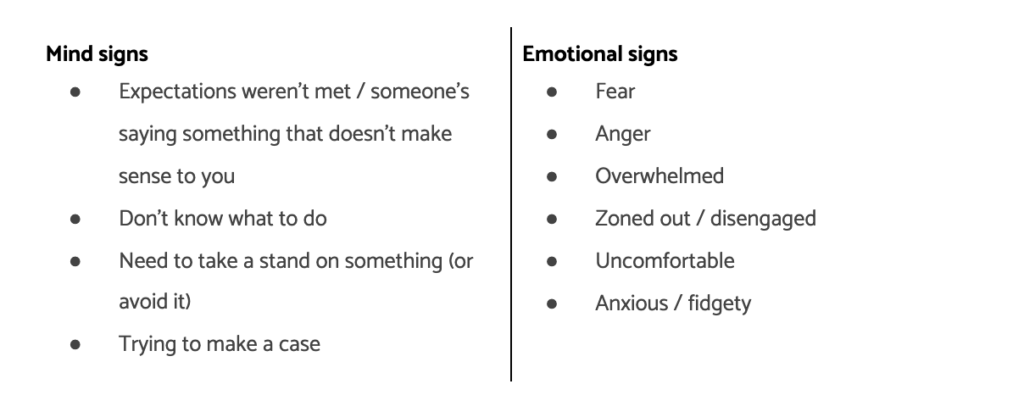
During established sync points:
Most teams have three key venues for getting in sync:
- Regular team meetings
- Ad hoc team meetings (for syncing with the team working toward the goal together)
- 1:1 meetings with reports
REFLECT
- When discussing work streams with your team or manager, how often do you step back to check that you're on the same page about goals and processes, versus diving into the tactical question of the day?
- Reflect on recent issues that have shown up for you or your team. How much of the problem can be traced back to people interpreting the goals and expectations in different ways?
- How often do you feel annoyed, anxious or confused around a project or meeting, but ignore it for the sake of "moving fast?"
TRY
The next time you're:
- Kicking off a new workstream
- Sharing a project status with a team
- Confused about something you're working on or hearing from others
Try putting the "call a sync" framework into place. Remember, this includes:
Step 0: What's the game? How does your company win?
Step 1: What's the goal? OUTCOMES, not tasks.
Step 2: Where are we on the field? How close are you to achieving the goal / what's blocking you?
Step 3: What's the play? What's the plan? What is each person involved responsible for?
Step 4: Check for sync.