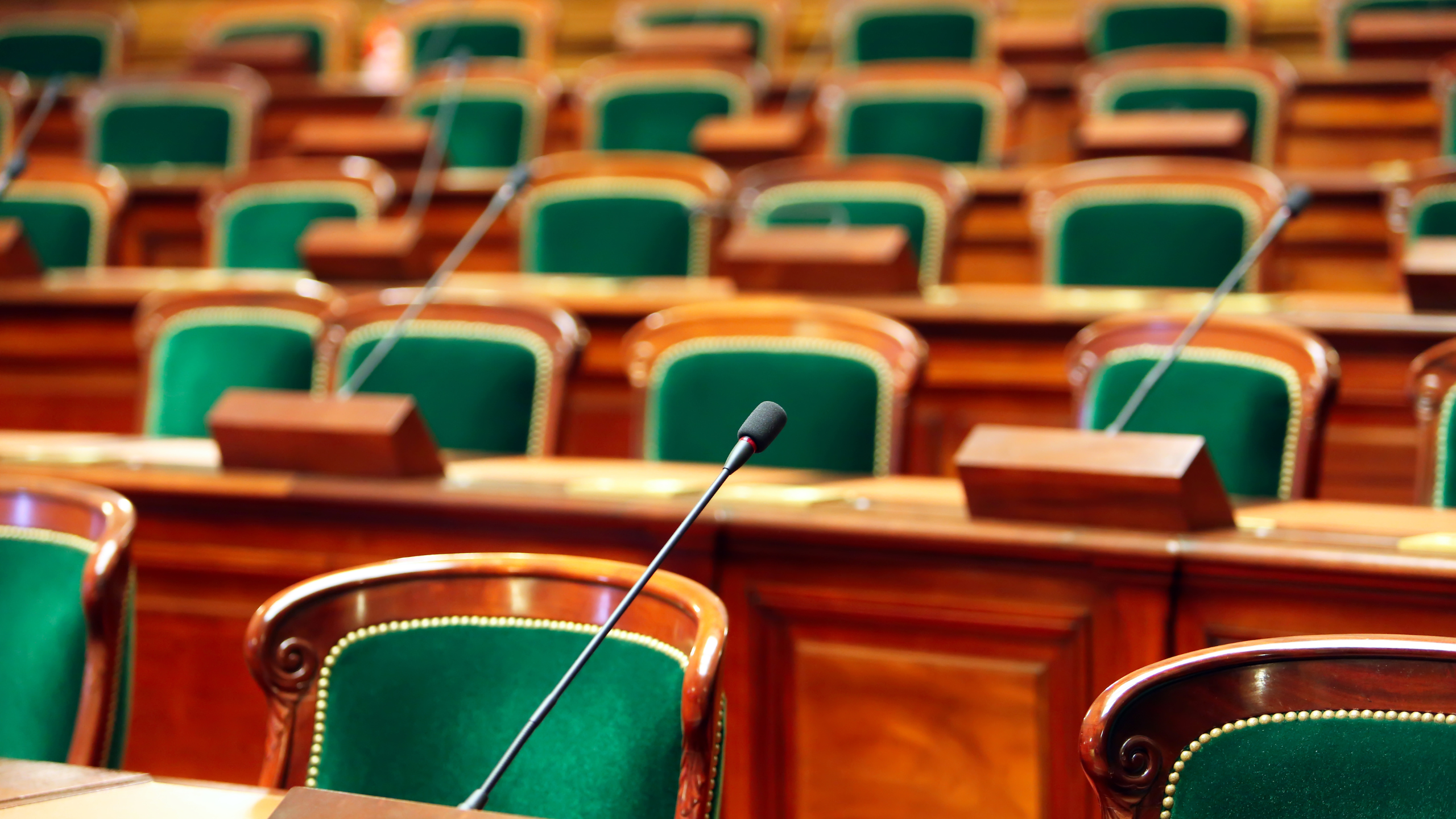
As the political situation in the US shifts this week, questions abound about what comes next. One of the few things most people seem to agree on is that it's an exceedingly difficult time to trust. According to the recently released Edelman Trust Barometer, worldwide trust continues to bounce around all-time lows, with trust in media (including social media) and government notably absent. In the following Sensemaker, we offer our thoughts on what trust is, why it's critical in a business environment, how organizations can be the frontline in rebuilding our sorely depleted common stock of trust, and how leaders can step up to build trust for (and with) their people.
THINK
We're certainly not the first to talk about trust, and many others, like Brene Brown, have done wonderfully insightful work on the subject, especially when it comes to the interpersonal dynamics of trust. However, in bringing a Talentism lens to the inquiry, we want to break down the fundamental elements of trust as related to unleashing individual and organizational potential.
If I say I trust you, what I'm saying is that I expect your actions to line up with my mental model of how I believe you'll behave, and that I believe those behaviors will align with my own goals and needs. This is key to human coordination, as it allows us to calibrate our expectations of the behavior of others. Nearly every coordinating mechanism we have as a species is based on trust. Money functions because we trust that others will value it — that they will exchange their goods and services for an agreed-upon symbolic fiction. Law is a codification of trust — that other people will tailor their behavior to a set of agreements, and others, in their roles as courts or law enforcement, will step inconsistently when those agreements are violated. For much of the history of our species, trust has been restricted to a small group we interacted with on a daily basis, such as nomadic tribes, extended families, kinship groups. The entirety of our modern society — with coordination spanning billions of people — rests on cultural inventions that enable shared expectations of behavior among strangers. Or, in other words, a radically expanded common resource of trust.
Trust is key to unleashing potential. This underlying trust that the behavior of others, especially strangers, can be predicted based on common sets of agreements, is key to creating clarity. As we've discussed in prior Sensemakers, gaps between expectations and experienced reality lead to confusion which, unaddressed, leads to people devoting their attention to self-protection rather than productive learning. Perhaps you've experienced working in a low-trust environment; how much energy did you devote in that context to second-guessing your coworkers? To protect yourself and your interests against perceived threats? How much mental space did you have in that context to take risks or openly explore your confusion with others? When trust is absent, so is the safety to consistently convert confusion into clarity. And that, in the end, is what unleashing potential is all about.
The three key kinds of trust. Looking under the hood, the kind of trust that enables predictive coordination relies on three key elements. Using these definitions interchangeably often leads to confusion. The three kinds of trust are:
- Honesty: I believe your words, that what you tell me is true, and I should expect you to honor any agreements we make.
- Alignment: I believe we share the same cultural expectations for behavior. I believe that I can lean on a shared set of assumptions such that we don't have to hash out every possible scenario. If (as inevitably happens) something prevents you from following through on an agreement, I believe we share the same approach to restitution or working through the problem together.
- Capability: I believe you have the actual ability to follow through on the commitments you make. Without that, while I may trust your intentions, I can't actually expect you to deliver.
Reestablishing trust is painstaking work. Broken trust is one of the most difficult forms of confusion to repair. Because trust acts as the foundation of a shared expectation setting, once trust is lost it becomes hard to even have conversations about what happened and how to repair it. Building (and rebuilding) trust therefore requires a clear eye to the specific dynamics of how trust is gained and lost, and a realistic assessment for yourself of what you can commit to. That last part is particularly important and foundational to how trust is built and lost; if you don't have the clarity and self-mastery to know and accept yourself (including your threat triggers and blind spots), the trust will inevitably be broken regardless of your intentions.
Trust is only as strong as your willingness to take personal responsibility. This doesn't just mean responsibility in the sense of honoring commitments (though that's important). It's about your willingness to take responsibility for the limits of your own perspective. Nearly all of us have an ongoing internal perspective that we see, think, and feel things clearly. That our experience is shared. That what is important to us is obvious and that others should be acting in accordance with all this. None of that is ever true, unless there is the consistent application of attention to make it so. Power dynamics amplify this problem because it is in others' interests to please the powerful, and this often takes the form of sending the leader signals that they were right across all those dimensions, even when they weren't. In this way, leaders get trust-breaking feedback loops — they don't get signals that people are out of alignment or don't trust them, while simultaneously that lack of signal confirms the bias to believe that their confusion is another person's failure. This is how certainty-based (aka political) cultures are born and sustained. The leader can only trust those that are willing to lie, and people "trust" the leader because they can be manipulated.
How you can build trust across the three key elements:
-
Building honesty-based trust is a process of consistently following through on stated commitments and sharing accurate information. This means putting attention upfront on the commitments you're making, the information you're sharing, and why. Many leaders fall into the trap of thinking they need to have all the answers, over-promise, or spin information in order to keep people motivated. Like the proverbial kid who never ends up going to Disneyland after repeated promises, these short-term attempts to boost morale lead to a longer-term loss of trust. The key action here is context-setting. Be clear about what you believe you can follow through on and why. If a commitment is a stretch or an experiment, label it as such. If you and the company are facing challenges, set expectations accordingly and then share the (real) reasons to hope you can meet them. If you have the information you don't want to share because it's partial or sensitive, simply say so and move on. Honesty isn't about being an open book all the time — it's about saying what you mean and giving people the context to make sense of it.
-
Trust at an alignment level rests on a foundation of culture clarity. In my coaching work, I often see trust being lost because of a mismatch in cultural expectations, e.g., someone believes trust means never questioning someone in public, or that someone's career ambitions will be put ahead of organizational goals. These are instances of culture confusion — or in other words, that there isn't good sync on the underlying beliefs about what behaviors will be rewarded, discouraged, and accepted. Building alignment at this level requires building a shared understanding across the company about what your culture is really about. How do you handle disagreements? What does it mean to be accountable? What are your key norms for behavior and standards for output? This needs to be rooted in reality, rather than aspirational; if you set culture standards you yourself won't uphold, you'll diminish trust more than you'll build it.
-
Establishing trust in your capabilities (or building trust in the capabilities of those who work with you) requires clarity about what you're like and responsibility designs well-matched to that profile. If you expect a five-year-old to successfully rewire your house, you'll likely come away with less trust in their capacities — and the fault will be yours, not theirs. This might be a silly example, but people do it in business all the time through poor role design for themselves and others. Building trust in someone's capabilities means seeing them consistently deliver against their goals, and this starts with setting the right expectations in the first place. Good role design starts with clarity around a person's Big 4. When seeking to build trust with the team in your own capabilities, it often starts (paradoxically) with openness about your weaknesses. When people see that you understand both your own gifts and limits, and that you've designed effectively for them, you create trust not only that you can follow through, but that when you fail you'll update accordingly so the same pattern won't continue.
All of the above means of building trust are based on a shared foundation: Clarity. Trust-building across all these vectors is based on the premise that you know yourself, accept yourself, and design accordingly. These are the fundamental principles for clarity. Without them, your good intentions are irrelevant; you will consistently make commitments you cannot keep, be surprised (and defensive) when you fail, and be disappointed that people begin to work around you. The same goes for your team — if you're having trouble trusting your people, there's a good chance you haven't invested sufficiently in mutual clarity and expectation setting, or you've hired poorly based on a lack of clarity about yourself and what that means for your organization. While this may sound obvious, we often see leaders go in the exact opposite direction of clarity when it comes to trust; they shy away from hard conversations or seek to manipulate people into obedience rather than openly exploring what's true. Often, this is rooted in fear — of confrontation, of insufficiency, or that people "won't get it." Note that clarity doesn't equate necessarily to total transparency; what matters is good expectation setting and a willingness to explore when those expectations aren't met, starting with yourself.
The big picture: Trust is a common resource. Much like a shared water source, trust in a group, organization, or society functions as a commons. In other words, when trust is high, everyone benefits: transaction costs go down, disagreements can be hashed out within the assumed bounds of common goals and basic positive regard, people devote energy to creation and exploration rather than protection. Like all common resources, trust is subject to depletion when not actively stewarded. Trust can be taken advantage of for personal gain, or privatized by poisoning the common well. This leads to dangerous feedback loops: as a group of people loses the belief that others will follow the same rules they do, their incentive to play by those rules — and to interpret the behavior of others in a charitable light — decreases in turn, setting off a race to the bottom that can be difficult to arrest.
Why business can lead the way on rebuilding society-wide trust commons: Many leaders today seek (and are increasingly expected) to take a lead on social issues. I believe one of the most significant contributions leaders can make (and one that will improve their performance) is rebuilding trust. If you want a hierarchy, and you agree to be near the top of it, you are designing to be responsible for the trust commons, both within your organization and also the broader network of stakeholders and clients around it.
Looking at trust through the commons framing, we can apply Elinor Ostrom's (the matriarch of commons economics) principles for protecting and rebuilding commons:
- Define clear group boundaries.
- Match rules governing the use of common goods to local needs and conditions.
- Ensure that those affected by the rules can participate in modifying the rules.
- Make sure the rule-making rights of community members are respected by outside authorities.
- Develop a system, carried out by community members, for monitoring members' behavior.
- Use graduated sanctions for rule violators.
- Provide accessible, low-cost means for dispute resolution.
- Build responsibility for governing the common resource in nested tiers from the lowest level up to the entire interconnected system.
Businesses are well-positioned to apply these principles. Because they exist as smaller, discrete entities with self-instituted boundaries, businesses can define their own cultures, including clear expectations for entry/exit, rewards for investing in ongoing clarity, and dispute resolution. Likewise, faster and more direct feedback loops from the market align incentives for more open exploration of what's actually happening through iterative management loops. Finally, more latitude in organizational design allows for experimentation to align capabilities and needs in ways that build trust.
Why the businesses that will take this lead are Clarity Companies: As described above, all forms of trust rest on a foundation of clarity. Thus, companies (and leaders) that treat clarity as a key goal will consistently be more effective in building trust than those that want trust but are unwilling to systematically invest in ongoing sync around personal and enterprise clarity. Ultimately, as the speed of change across society continues to increase, businesses that invest in clarity will not only be more anti-fragile — turning the inevitable confusion of change into ongoing learning — but can be the leading edge for rebuilding our common stock of trust for society as a whole.
REFLECT
- Who do you trust? Why?
- When have you experienced losing trust in someone? Why?
- Have you experienced losing trust in someone and then regaining it? How?
- Looking at the reflections above, what do you think you're currently doing that's contributing to the ability of others to trust you?
- What are you currently doing that may be undermining it?
TRY
Pick someone you want to build trust with. In your next three conversations with them:
- Take the time to more explicitly set context (toward the goal of building honesty-trust). What are you doing? What are you expecting (and what should they expect)? What can you commit to and what is an experiment?
- Align on cultural expectations around trust (toward the goal of building alignment-trust). What does trust mean to you and to them? What are you counting on them for? What behaviors of yours have been hard for them to interpret in the past?
- Discuss your (and their) responsibility designs in light of what each of you are like (toward the goal of building capability-trust). What areas are you compulsive about that they can count on you to follow through? What areas do you have blind spots or gaps around where you will likely need support?